
Most of us spend the majority of our day working. Therefore, taking care of our physical bodies and mental health are critical to being an effective and productive employee. But we can’t forget about eye health too. Thursday, October 12 is World Sight Day.
World Sight Day is sponsored by the International Agency for the Prevention of Blindness. They want to focus the world’s attention on the importance of eye care in the workplace. Eye Health Doesn’t Just Impact Your physical vision, health and life but also your job.
IAPB has a two prong approach to reaching this initiative. One is encouraging people to prioritize their own eye health. This means showing some tender loving care (TLC) to your eyes. When this happens preventable eye diseases and conditions can be treated or avoided enhancing overall health and well-being. Two is motivating the world’s employers to provide quality eye care to their employees. Whether people are working in manufacturing factories or professional office buildings they want to ensure eye care is available, accessible and affordable for everyone. So, here are 6 tips you can implement to care for and protect your eyes at work.
1. Take Time for Regular Eye Exams

I know you are working hard on the job but take some time from work and schedule an eye exam. When I was working in an office environment I would use my sick leave and make my eye doctor appointments. Regular eye exams can help in the early detection and treatment of vision problems. They allow your eye doctor to determine if you need to update your prescription eyeglasses or contact lenses. A comprehensive eye examination can also catch early signs of health issues, such as diabetes, high blood pressure and heart disease.
2. Eat a Balanced Diet

When I worked in an office, I packed lunch. Although there were several restaurants in walking distance of my office building, I rarely ate at them because I wanted to avoid overly processed food. I tried to include a green leafy salad and some kind of fresh fruit. It has been documented that fruits and vegetables reduce the risk of developing age-related macular degeneration. There is also evidence that foods rich in vitamins C and A have beneficial effects on eye health.
3. Drink Plenty of Water
Many of us drink coffee, tea or other caffeinated drinks at work. But what about water? The eye needs water to stay lubricated, comfortable, and functioning effectively. Dry Eye occurs when the eye doesn’t produce enough tears, or the right kind of tears for lubrication, causing irritation, inflammation, and pain.
Just about every job I have worked I had a water bottle at my desk. Big ones, little ones, tall or short, they came in a variety of shapes, sizes and colors. I specifically kept it at work for easy access. Each morning I would head to the breakroom or water fountain to fill up for the day.
4. Take a Break From Computer Screens
Today’s modern office jobs require people to stare at screens for extended periods of time. Unfortunately, using digital devices for too long can cause digital eye strain. Are you experiencing blurred vision, eye fatigue, neck and shoulder pain? What about headaches and dry eyes? Then you probably have digital eye strain also known as Computer Vision Syndrome.
Take frequent eye breaks throughout the work day. Try the 20-20-20 rule, meaning that every 20 minutes, you take a 20-second break to look at something 20 feet away. Make a conscious effort to blink while using the computer to avoid dry eyes. Adjust screen brightness, contrast and text size settings to view content more clearly and comfortably. Proper seating posture in your office chair and good office lighting can also help relieve digital eye strain.
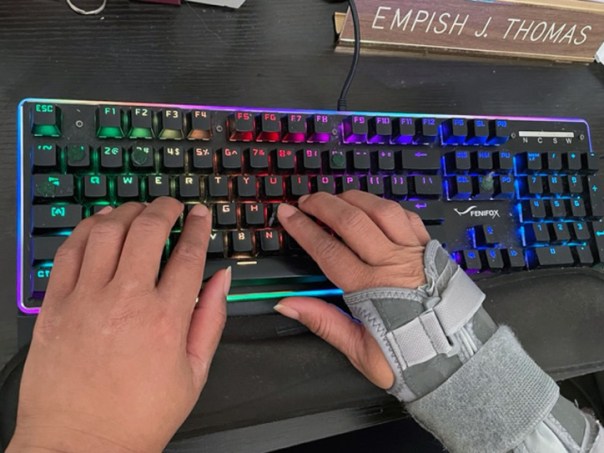
I don’t deal with digital eye strain , but I do take breaks which reduce neck, shoulder and wrist pain. I also purchased a better quality office chair along with a mechanical keyboard and wrist guards.
5. . Keep Track of Vision Changes
Are you noticing changes in your vision? Are you squinting at your computer screen? Need to enlarge the font? Need extra lighting in your office? Don’t wait and think it will just go away over time. Schedule an eye exam. Tell your doctor about sudden changes in your sight or if you are experiencing pain or discomfort.
During my early days of vision loss, whenever I noticed a slight change I would contact my doctor. It didn’t matter if the change was big or small. It was important for me to preserve as much of my eyesight as possible. I knew waiting could cause harm or permanent damage.
6. Use Protective Eye Wear at work
Some jobs expose you to hazardous chemicals, radiation, particles in the air, or excessive heat. Eye injuries at work are more common than you think. Two reasons are either not wearing eye protection or wearing the wrong kind. But, practicing proper safety guidelines and procedures can lessen or even prevent these injuries.
 Empish J. Thomas
Leave a comment