July 26 is the 33rd anniversary of the Americans with Disabilities Act (ADA). In honor of this enduring achievement and powerful civil rights legislation I have crafted a book list. These books are written mostly by disabled people and speak loudly to our lives, hopes and dreams. My aim is to spark your curiosity, educate and increase understanding and empathy.

These books are available in print format, but since I am blind, they are all audiobooks. You can find them at the NLS Library for the Blind and Print Disabled, Bookshare and probably your local library. You can also purchase it at Audible or other audiobook sellers.
1. Demystifying Disability: What to Know, What to Say, and How to Be an Ally by Emily Ladau
A real, true to life and informative book on disability. Ladau reads the audio version and provides an approachable guide to being a thoughtful, informed ally to disabled people. She gives real actionable steps for what to say, what to do and what not to do. Through her kind but candid tone, Ladau shares how you can help make the world a more inclusive place. .
2. True Biz by Sara Novic

This is a fictional story about the students at the River Valley School for the Deaf. They are typical kids. They just want to hang out, pass their finals, and have adults stop telling them what to do with their bodies. This is a story about sign language and lip-reading, disability and civil rights, isolation and injustice, first love and loss. This is an unforgettable journey into the Deaf community and a universal celebration of human connection.
3. Disability Visibility: First-Person Stories from the Twenty-First Century edited by Alice Wong
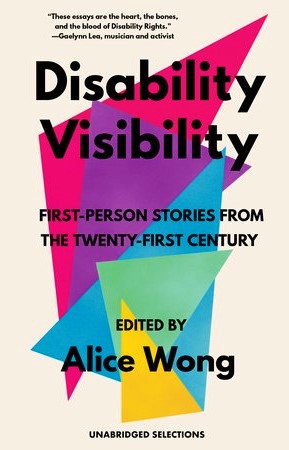
This is a remarkable collection of writings by disabled and chronically ill activists, artists, and authors. The topics are as diverse as the type of disability presented. The 30+ entries cover technology, incarceration, fashion, homophobia, medical issues, organizing strategies, psychotherapy, racism, relationships, sexism and so much more.
4. My Body Is Not a Prayer Request: Disability Justice in the Church By Amy Kenny

Kenny is physically disabled and a Christian. She writes her story from this perspective. She gives many examples of how her body is used as a call to action to the church. She wants change and the church to be more inclusive.
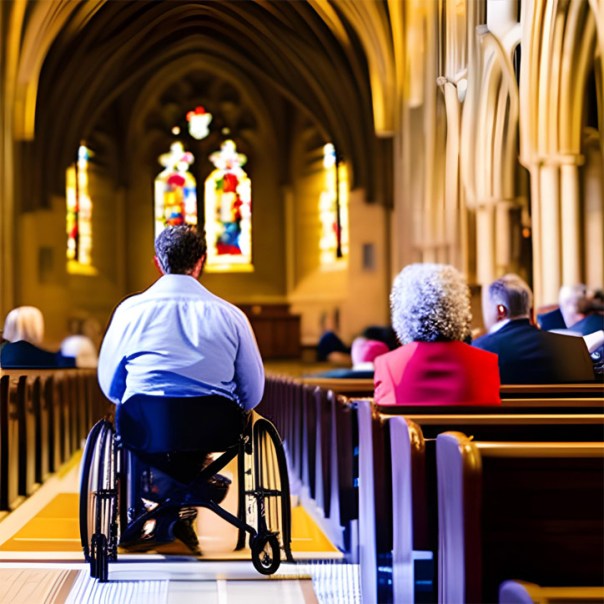
Kenny strongly communicates that people with disabilities don’t need to be fixed, cured or healed. As believers she says our bodies are already sanctified and whole. We are already new creations in Christ. She asked do we need to call these kinds of behaviors out or just take the high road?
5. Haben: The Deafblind Woman Who Conquered Harvard Law by Haban Girma
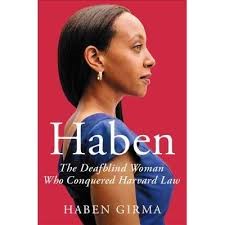
Girma made history by being the first black, deafblind woman to graduate from Harvard Law School. She is from Eritrea and moved to the United States when she was a child. She wrote this straightforward, no-nonsense book about her life.
6. Heart of a Patriot: How I Found the Courage to Survive Vietnam, Walter Reed and Karl Rove by Max Cleland

Cleland was a disabled Vietnam War veteran and Georgia politician. In the forward he speaks directly to brothers and sisters of war. Those who are trapped in the memories. To those overwhelmed, coping on their own and struggling with what we have done and what has happened to us. To those left hopeless and confused about our lives. He says, “It does not make us victims, it makes us veterans.”
He came back from Vietnam missing three limbs (right arm and both legs) and was treated at Walter Reed Army Medical Center. Doctors were not optimistic about his future, but through the bonds he formed with other wounded soldiers, and through his own self-determination, he learned how to be mobile and overcome his despair.
7. Being Heumann: An Unrepented Memoir of a Disability Rights Activist by Judy Heumann
Heumann was a disability advocate and her actions played a vital role in the passing of the ADA. She was featured in the 2021 Oscar nominated documentary Crip Camp that aired on Netflix. However, Judy was known much more than her role in a film. Penguin Random House summarized her story best, “One of the most influential disability rights activists in US history tells her personal story of fighting for the right to receive an education, have a job and just be human. A story of fighting to belong in a world that wasn’t built for all of us and of one woman’s activism—from the streets of Brooklyn and San Francisco to inside the halls of Washington—Being Heumann recounts Judy Heumann’s lifelong battle to achieve respect, acceptance and inclusion in society.”
8. The Beauty of Dusk: On Vision Lost and Found by Frank Bruni
Bruni is a New York Times columnist and bestselling author. This book is a wise and moving memoir about aging, affliction, and optimism after partially losing eyesight.
He eloquently recounts his adjustment to vision loss. This medical and spiritual journey reappraised his own priorities and also reaching out to, and gathering wisdom from, longtime friends and new acquaintances who had navigated their own traumas and afflictions. The result is a poignant, probing, and ultimately uplifting examination of the limits that all of us inevitably encounter, the lenses through which we choose to evaluate them and the tools we have for perseverance.
9. For the Benefit of Those Who See: Dispatches From the World of the Blind by Rosemary Mahoney
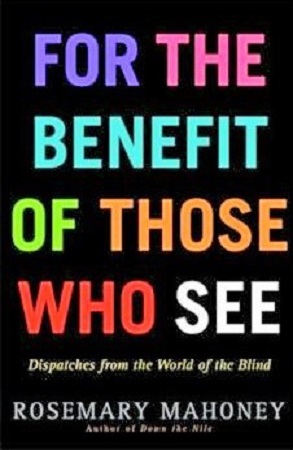
Mahoney deals with her fears and curiosities about the blind and embarks on her own journey of blind awareness. She tells the story of Braille Without Borders, the first school for the blind in Tibet, and of Sabriye Tenberken, the remarkable blind woman who founded the school. Fascinated and impressed by what she learned from the blind children of Tibet; Mahoney was moved to investigate further the cultural history of blindness. As part of her research, she spent three months teaching at Tenberken’s international training center for blind adults in Kerala, India, an experience that reveals both the shocking oppression endured by the world’s blind, as well as their great resilience, integrity, ingenuity, and strength.
10. African American Slavery and Disability: Bodies, Property, and Power in the Antebellum South, 1800–1860 by Dea H. Boster
Disability is often mentioned in discussions of slave health, mistreatment and abuse, but constructs of how “able’ and “disabled” bodies influenced the institution of slavery has gone largely overlooked.
This volume uncovers a history of disability in African American slavery from the primary record, analyzing how concepts of race, disability, and power converged in the United States in the first half of the nineteenth century.
 Empish J. Thomas
Leave a comment