
As human beings we are more comfortable interacting and talking to people who are like us. Those with the same kind of interests or backgrounds. Top on the list of similarities tend to be our religion, employment, marital status, education and income. This can also include race and gender. So, when the opportunity to converse with someone who is different it can be uncomfortable, awkward and challenging.
Even more so if the person is disabled. Although disability is common, we still struggle to interact because of fear, apathy or lack of knowledge. One question I hear all the time is, “What do I say to a blind or visually impaired person?” So, I decided to address it in this post. Nov. 1-7 is World Communication Week which focuses on bridging the gap in all the ways we talk and interact with each other. Good communication is critical for our existence and here’s 13 ways to do it effectively with a blind person.
1. Start with saying hello.!

Just like in any other interaction, saying hi is the way to get the conversation going. Or even just to acknowledge your presence. Some people are afraid to speak to me and so say nothing. This is not the best move because I might not even know you are there.
This has happened to me more times than I can count. For instance, I am trying to find a seat but it is already taken. The person seating says nothing to me and then we have this weird interaction when I step or bump into them. Just saying hello would have helped me tremendously, letting me know someone is there and avoiding the strange interaction.
2. Identify yourself after saying hello
This tip goes along with the first one. Please state your name when saying hello and introducing yourself. Don’t assume I know who you are and just start talking. People think blind folks have exceptional hearing. That we can detect specific voices. This is not true. Just light sighted people forget a name I can forget your voice. Now with that being said, my ability to recognize you will improve as we interact more.
3. Speak in a normal clear voice
People will unconsciously use a sweet or childlike tone of voice when first meeting me. This can communicate disrespect without even knowing it. We are all adults here, so no need to talk to me this way. Some will increase their volume. This is unnecessary because my disability is visual not deafness or hard of hearing. My last example is talking too slow, believing I have processing challenges. The best way to handle all of this is to not make assumptions. Talk normally and we will get along just fine.
4. Don’t speak for me
This is the one that really gets my goat! I am an independent and assertive woman. I don’t need you to speak for me. I am fully capable of talking for myself. This kind of behavior communicates you don’t think much of me and/or because of my visual disability I don’t know how to take care of business.
5. Be inclusive in your conversation
We live in a visual world. Yet, some sighted people forget or are not aware of how much visual cues play into the way we communicate. What do I mean here? Facial expressions, body language and hand gestures are all visual cues I miss resulting in misreading what is happening. It is helpful to clue me in and verbally communicate what is occurring. Don’t brush me off and say it is nothing or you wouldn’t get it. Include me in the conversation and interaction.
6. Ask permission before assisting
I know many sighted people are kind and their heart is in the right place. But, not talking to me first when helping can be a big no-no. It can be invasive and alarming. If you want to help just ask first. Allow me to say yes or no. Also, I can better direct the assistance by sharing exactly what is needed.
7. Accept that I don’t need your help
If I nicely say no to your assistance accept it. Please don’t be overbearing and insist. This communicates you don’t respect my wishes and think I am incompetent . Plus, accept the fact I might not share details. Many times, I have interacted with people who want a full explanation of why I won’t take their help. This is very frustrating. I am my own person and don’t automatically have to take help when offered.
Please trust I know my own abilities and limitations. I know when something is too difficult and how to ask for help.
8. Don’t apologize for saying sighted words or phrases
No need to cringe when saying, “see you later.” I know it is just a familiar phrase we say when departing. I won’t take it personally. I have accepted my blindness and fully understand I live in a visual world. So, no need to tip-toe around me or sensor your speech.
9. Don’t grab my arm
This one makes my blood boil! I am particular about folks in my personal space without any verbal communication. Think about a pregnant woman. Some people touch her belly without her permission. The belief is she will be okay because she is carrying a baby. But her body is her own.
When first meeting, grabbing my arm is especially intrusive. The thought is I need navigation help. Perhaps you see me about to run into something. This might be true but the best way is to talk to me. Just say something and allow me to correct myself.
10. Blindness is physical not a personality trait
It can be easy for all of us to place people in boxes and assign labels . But bear in mine we are all unique individuals. My vision loss is solely a physical thing. The essence of who I am would be the same regardless of blindness.
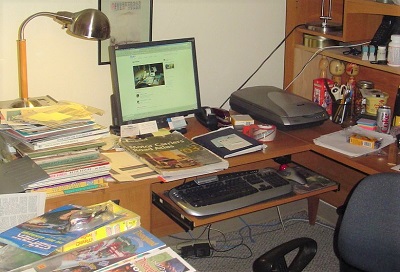
Let me give you a good example. I have always been an organize person. This stemmed from my childhood. Yet, when I went blind as an adult I didn’t stop being organized. As a matter of fact, it came in very handy because of my vision loss. My ability to keep things together complemented my disability because I could not afford to hunt around for misplaced or lost items.
11. Avoid asking personal questions about disability
Many sighted people are curious and want to know the story behind my blindness. But please refrain until we know each other better. On first meeting it is inappropriate to ask a bunch of questions about a person’s disability. Let them control that part of the conversation and reveal info on their terms.
12. Give specific directions

People love telling me it is over there when giving directions. But the funny thing is I have no idea what is “over there.” Usually, I have to follow up with specific questions to get a better idea. This can be avoided by giving details. For example, don’t say, “The bathroom is down the hall.” Instead say, “The bathroom is two doors down the hall next to the elevator.”
13. Give a clear word picture when describing something
You have heard of the phrase a picture is worth a thousand words. Well, blind folks need those thousand words because we can’t see that picture. So, when we are conversing include color, size, shape or landmarks.
Follow the Golden Rule
Feeling overwhelmed with my suggestions? Afraid you won’t get it right? Well, think of it this way. All of these ways to interact and talk to a blind person are summed up into one tip.
Follow the golden rule by treating others the way you want to be treated. Pause and think about how you would react if the shoe was on the other foot. Following this simple advice will help you interact and communicate with a blind person.


 Empish J. Thomas
Leave a comment