
Years ago when I moved to Georgia, I was working on getting my driver’s license. I had signed up with a local driving school. They would pick me up after work and we would practice for about an hour driving all over town. We worked on driving on the freeway and busy city streets. We worked on making lane changes, turns and parallel parking. After a few short weeks, my instructor was pleased. I was ready for the behind the wheel test. Then the lights went out. Literally. I started having problems with my eyes and shortly after that it was all over. No license for me and no ability to drive.
I know my story sounds sad and depressing. Believe me it was at the time. However, I am not here to make you cry and feel bad. There is a happy ending.

I adjusted. I figured out how to get around. I made lemonade out of lemons. And have hit the road every since. Here’s the 5 ways I stayed in the fast lane.
1. Bus Travel with White Cane
The first thing I did was learn how to travel with a white cane on public transportation . Taking the bus was a no brainer because I had been doing it all my life. However, traveling blind is totally different and I needed help. I took vision rehabilitation training. My instructor and I would go out and practice various bus and train routes. I did route planning by making a schedule of my commute. Then we would hit the road.
I learned to sit in the front of the bus so the driver could tell me where to get off. It was also a gentle reminder to not forget I was there. I learned to confirm the correct bus before boarding. Then to confirm my stop before departing.
2. Paratransit
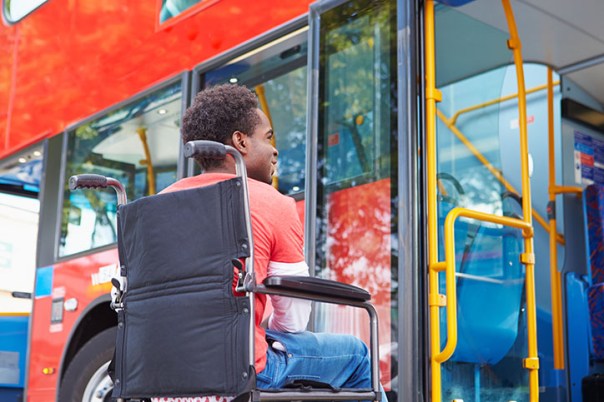
Next was using paratransit. This transportation service is available to the disabled community. If you can’t drive and have challenges getting around on traditional public transportation this option is for you. I started using this service after years of taking the bus. I did it because of the harassment I experienced on regular public buses. I discovered over-friendly passengers would try to help me by only causing problems. See, I knew how to travel and where I was going. But people would make assumptions that I didn’t. Then when I asserted myself things would go sideways. They would either get agitated, annoyed or overrule me. So, to avoid the headache I stopped and move to paratransit.
3. Personal Drivers
I also hired personal drivers. This was a good alternative for times when I wanted some personal assistance or had several things to do when taking the bus would be too long. These folks would pick me up and take me to run errands, doctor appointments, grocery shopping and even to and from work. We would negotiate price and time. This arrangement worked for years and I still do it today, but not often.
4. Sighted Friends

I would occasionally hitch a ride from a sighted friend. Sometimes my friends would pick me up or drop me off. During those times I used a handicap decal. I submitted paperwork to the DMV describing my disability and they would provide a plastic handicap decal to hang on the rearview mirror. This decal really came in handy at busy mall parking lots. During the holiday season when the mall was crowded we could avoid the long walk by parking up close.
5. Cabs and Ride Share
When Uber and Lyft came to my city I was so excited. WooHoo! Yet another choice for hitting the road. Yes, I used taxi cabs. But they were limited to my neighborhood. Then when I was in the city they could be expensive. Sometimes drivers would even try to ride me around to get extra fair; thinking because I couldn’t see I wouldn’t notice. But I did and reported them.
With a simple flick and swipe on my iPhone I could have a personal driver in minutes. Hallelujah! The price was reasonable and I could continue to zoom around the city whenever I wanted too. Auh, yes, freedom and independence.
When I call up the ride on my phone I double check the location and add a note for the driver. This note lets them know I am blind and what I’m wearing. They can “look” out for me and we don’t miss each other.
Uber and Lyft have had their share of problems. Regardless, they are still a good option over a cab because I have more information about the driver. The driver’s photo, vehicle type and tag number are all displayed on my screen. I also know the cost and there are fewer opportunities to take advantage of me.
Driving with Bioptic Lenses

Some people with low vision use bioptic lenses to drive. These are glasses with a mounted telescope lens. These glasses help them to see the road and signs better. Many states allow people with mild to moderate levels of central vision loss but with intact peripheral, or side, vision to drive with bioptic lenses.
In order to drive with low vision, an eye exam must be conducted to verify vision levels. If the person qualifies bioptic lenses will be made. There are driving training and tests to perform with the bioptic lenses before a license will be issued.
Driving Options for Other Disabilities

Let’s say a person doesn’t have vision loss but another disability? For example, paralysis, hearing loss, missing limbs or a developmental disability. How do they hit the road? Good question. They can use hand control modifications, like Joysticks, turn signal adapters and lift petals.
A more commonly used adaptation is a van modified with a wheelchair lift . These vehicles are specially designed for a driver in a wheelchair. Many years ago, I had a supervisor with a wheelchair van. When we had to go out for work events she would lower the lift via remote control. Then roll onto the van and position herself in the driver section. She would use hand gears to operate the vehicle.
Regardless of disability there are all kinds of ways to cruise down the road. The key is assessing the options available, educating yourself and talking to other disabled people. Then you too can hit the road.


 Empish J. Thomas
Leave a reply to Empish Cancel reply